
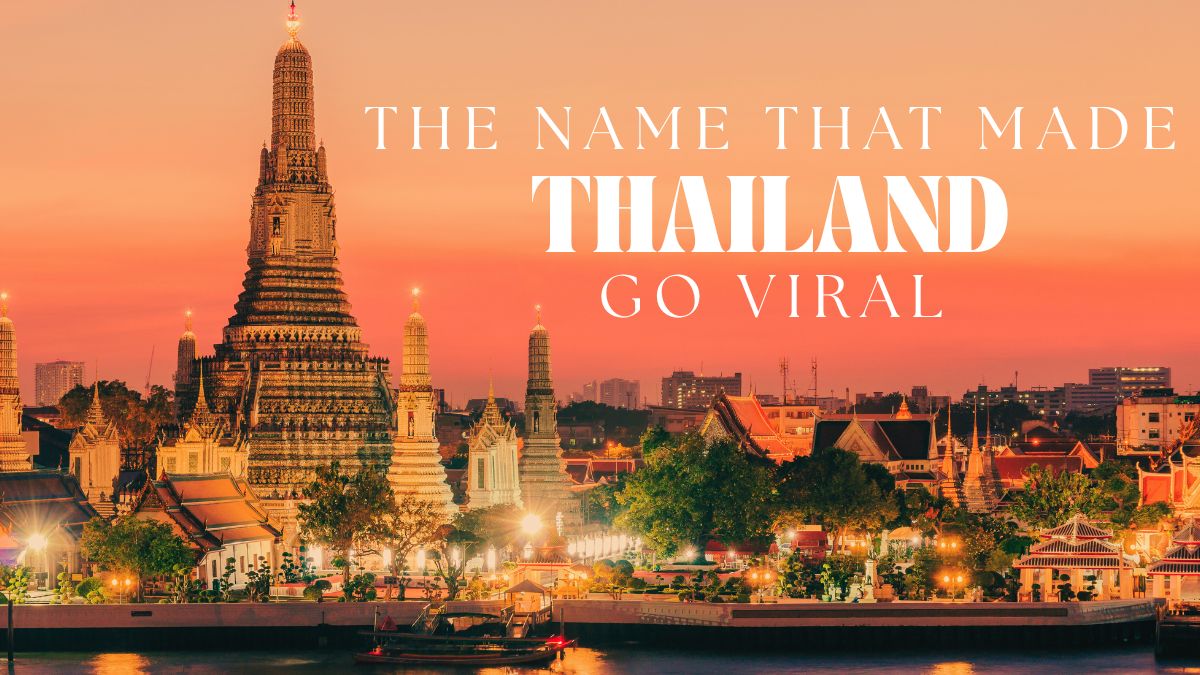
How certain Thai city names exploded on social media
When Place Names Became Content
Photos were the main focus of travel information not too long ago. Temples, restaurants, beaches, and sunsets. Something changed recently. The location’s name itself began to serve as the hook. In Thailand, people were sharing more than just their travel destinations. On the internet, they were discussing the name’s appearance, pronunciation, and feel.
Suddenly, thousands of people shared, bookmarked, and commented on a post that had a city name in the caption. A few had never visited Thailand. Some had no intention of going. Just the name piqued interest.
This is how certain Thai city names transitioned from geography to online culture.
Why Thailand Was Perfect for This Moment
Thailand was already well-known throughout the world. Online, island life, food content, tourism, and digital nomads were all prevalent. Thai city names blended particularly well with social media platforms’ preference for brief captions, quick jokes, and visual storytelling.
They were simple to type. simple to recall. It’s simple to create a feel.
The Qualities That Made Certain Names Spread
They are short
Short names perform better online. They fit cleanly in captions, overlays, and hashtags. Thai city names like Pai or Krabi do not need explanation. They stand on their own.
They sound playful to non locals
International audiences may find certain names’ rhythms or sounds humorous, lighthearted, or unexpected. They are spoken aloud. They only repeat the name in their comment.
They feel like a brand
Without trying, some city names already feel like lifestyle labels. You can imagine them on a tote bag, a playlist, or a travel vlog title.
They invite curiosity
People are curious about how to pronounce them. They are curious about the location’s appearance. The name turns into a doorway.
How Social Media Turned Names Into Trends
Captions did the heavy lifting
Instead of long descriptions, creators started posting short captions that centered the city name. One word. One location. One vibe.
Comments fueled momentum
People tagged friends, corrected pronunciations, joked, and asked questions. Every conversation advanced the name.
Visuals reinforced the idea
A simple city name paired with a strong visual made the place feel iconic. Over time, the name itself became shorthand for a certain lifestyle.
Repetition built familiarity
Even for individuals who had never been there, the more times the same name appeared on various platforms, the more authentic it seemed.
How Algorithms Reward Name Recognition
Social media sites are designed to identify trends. Algorithms interpret a city name as a signal when it appears frequently in captions, comments, and hashtags. The name itself turns into content that may be searched.
The platform then starts promoting relevant posts to additional people. The same city name appears repeatedly to people who have never interacted with travel-related content. Familiarity develops rapidly.
Repetition Creates Authority
A name feels more authentic the more times it occurs. Because they keep seeing it, users assume it matters. In this way, a place name becomes more than just a location; it becomes a cultural reference.
Short Names Get Picked Up Faster
Algorithms favor clean text. Short names are easier to recognize, easier to cluster, and easier to recommend. This gives certain cities an advantage without anyone planning it.
Engagement Locks the Loop
People prolong the name’s existence by making remarks about pronunciation, jokes, or comparisons. This is seen as value by the algorithm, which continues to circulate it.
Even though the locations themselves are equally stunning, this feedback loop explains why certain names take off while others stay unnoticed.
Specific Thai Cities That Benefited From This
Pai
Short, calm, and easy to say. Pai became associated with slow living, nature, and escape. The name alone signals a mood.
Phuket
Already famous, but social media added a new layer. The name became part of jokes, memes, and playful captions, increasing visibility beyond traditional travel content.
Chiang Mai
The name became linked to remote work, creativity, and cultural depth. It stopped being just a destination and started representing a lifestyle choice.
Krabi
The sound of the name combined with dramatic scenery made it ideal for visual platforms. The name felt adventurous before anyone saw the video.
Why This Was Not Accidental
This particular result was not anticipated by any tourism board. This was natural. Names that were emotionally adaptable and simple to repeat were awarded on social media. The names of Thai cities just so occurred to fit those criteria.
A name can spread more quickly than any advertising effort if it matches the internet.
When Locals Notice Their City Name Going Viral
It can be disturbing for locals to see their city name trend online. Suddenly, a term they’ve used casually their entire lives appears in comment sections, captions, and memes all across the world.
Some residents are proud. Others are perplexed. Some are protective.
A city’s name is frequently simplified in the viral form. Instead of being a physical location, it becomes a symbol or an emotion. As a result, there is a gap between how the area is viewed by outsiders and how residents live there on a daily basis.
Cultural Compression
When a name goes viral, complex culture gets flattened into a few repeated ideas. A city becomes known for one feeling or one visual, even if it contains multitudes.
Economic Side Effects
Travelers, digital workers, and businesses may become interested in viral content. Local economies may benefit from such, but neighborhoods may rapidly change and prices may rise.
Identity Shifts
Locals may begin to view their city differently once a name becomes well-known throughout the world. Prior to social media, the name had no new meaning.
This case shows that virality is not neutral. Fast-moving names have consequences in real life.
What This Means for Branding and Naming
Place names going viral reveal something bigger. Names matter more than people think.
Names are the first impression
Before visuals load, before stories are told, the name sets the tone.
Simplicity travels faster
The easier a name is to share, the more likely it is to spread.
Culture gives names power
When a name carries stories, humor, or feeling, people engage with it naturally.
Repetition builds trust
Seeing the same name often makes it feel familiar and safe.
Lessons Creators and Businesses Can Learn
Treat names like content
A name should be shareable, not just accurate.
Think globally
How a name sounds to people outside your culture matters online.
Pair names with consistent visuals
This helps lock the association in people’s minds.
Let audiences participate
When people joke about a name or ask questions, let it happen. That interaction fuels reach.
FAQs
Why did Thai city names spread more than others
They combined simplicity, sound, and strong visuals at the right time.
Can other countries experience this
Yes. Any place with distinctive names and strong content can see similar trends.
Does pronunciation matter
Yes. Names that feel approachable travel faster.
Is virality permanent
No. But the recognition can last if supported by consistent content.
Conclusion
Names are more than just descriptions, as shown by the popularity of Thai city names on social media. They serve as signals. They express identity, emotion, and curiosity. A name may effortlessly traverse platforms, cultures, and timelines when it is suitable for the internet. Thailand’s beauty wasn’t the only reason it went viral. Its titles provided individuals something straightforward, memorable, and repetitive to cling to, which is why it became viral.
That kind of viral simplicity raises an important question about ownership. In The Name You Can’t Trademark, we explore what happens when a name becomes too common, too cultural, or too shared to belong to any one person or brand.